As temperatures drop, most men treat outerwear as an afterthought — a shield against the cold, not a piece of style. But a well-made overcoat is much more than protection from the elements. It’s the most visible layer you own — the first thing people see and often the last impression you leave.
If you want to look sharp this winter, focus less on trend and more on execution: the right fabric, the right fit, and the right way to wear it.
Fabric: The Foundation of Every Great Overcoat
The first decision — and the one that determines everything that follows — is fabric. An overcoat should insulate, drape beautifully, and resist the hard realities of winter wear. The right cloth balances warmth, durability, and character, adapting to both your wardrobe and your climate.
Wool: The Workhorse of Winter

Wool is the backbone of fine overcoats — reliable, versatile, and time-tested. It’s naturally insulating, breathable, and resilient against wrinkles and weather.
A tightly woven melton wool provides a dense, smooth finish ideal for formal coats like a Chesterfield or topcoat. A twill or herringbone weave gives more visual depth and texture, making it appropriate for slightly more casual use.
-
Weight Guide:
-
16–18 oz. wool works well for transitional wear or temperate cities.
-
20–24 oz. melton wools are better suited for true winter — think Philadelphia wind and Northeast cold.
-
-
Pros: Warm, durable, shapes beautifully, and holds a crease.
-
Cons: Can feel heavy in milder weather; cheaper wools may pill or lose structure over time.
Style Tip: A navy or charcoal melton coat in the 20–22 oz. range is one of the most practical long-term wardrobe investments a man can make.
Cashmere: The Pinnacle of Luxury
Cashmere transforms an ordinary overcoat into a statement of refinement. It’s luxuriously soft, light, and exceptionally warm for its weight. The fibers — finer and smoother than wool — create a natural sheen and unmatched comfort.
However, pure cashmere is more delicate. It can show wear at stress points like elbows and cuffs over time. For that reason, many tailors (us included) often recommend a wool-cashmere blend — typically 80/20 or 90/10 — which retains the buttery texture of cashmere while gaining structure and longevity from wool.
-
Weight Guide:
-
16–20 oz. is typical — warm yet lightweight, perfect for city winters.
-
-
Pros: Exceptionally soft, luxurious drape, great warmth-to-weight ratio.
-
Cons: Less durable than wool, higher cost, may require gentler care.
Pro Tip: If you want one “special” overcoat, make it a navy or camel wool-cashmere blend — elegant enough for evening wear, durable enough for daily use.
Camel Hair: Relaxed Sophistication
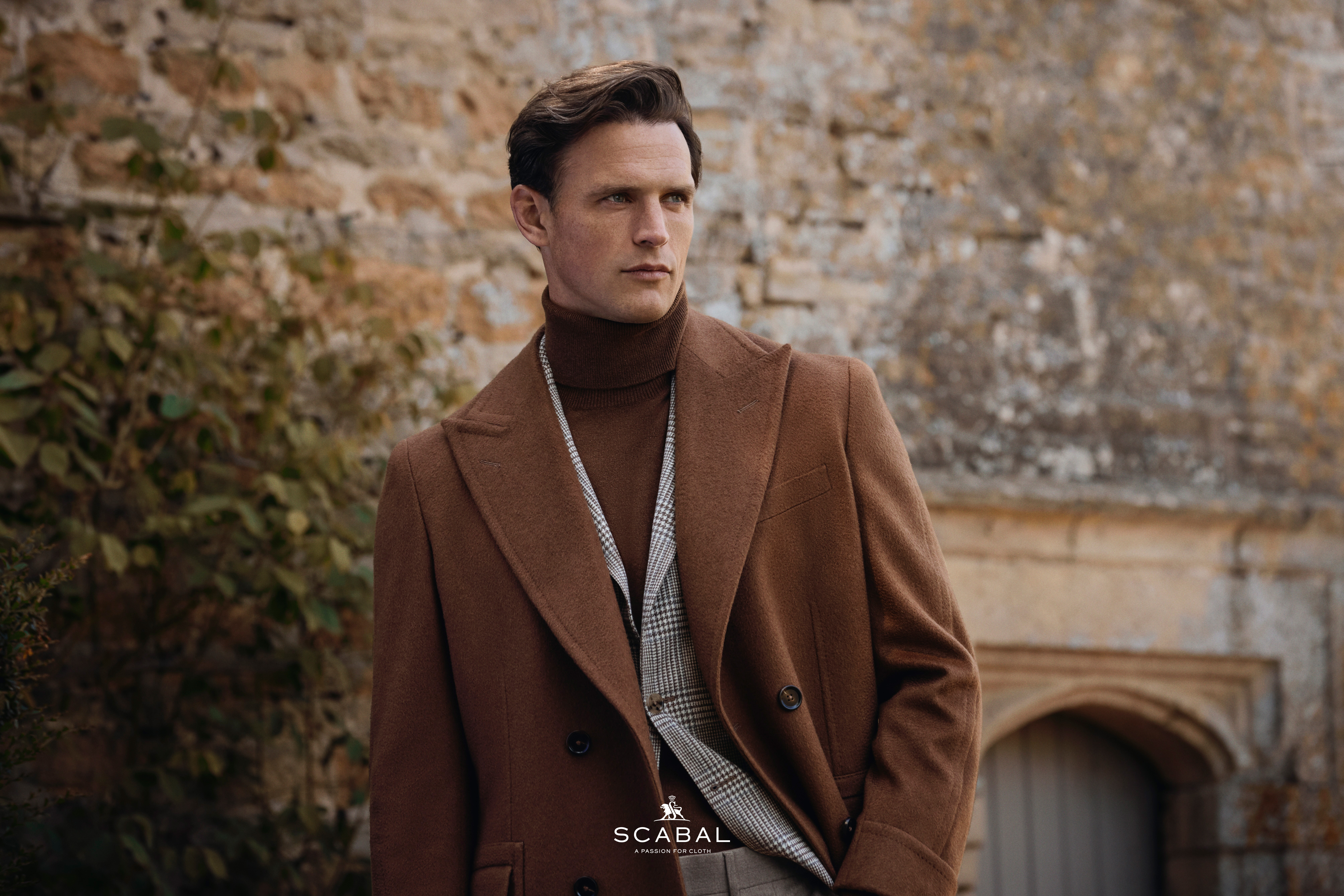
Distinctive, tactile, and quietly bold, camel hair sits between casual and luxurious. Known for its unmistakable golden hue and plush texture, it offers excellent insulation and breathability. Its origin — the undercoat of the Bactrian camel — gives it natural loft and softness.
Camel hair drapes slightly softer than wool and pairs especially well with more relaxed styles like the polo coat. That said, pure camel hair can lose shape over time, so blends (camel + wool) are ideal for maintaining structure while preserving warmth.
-
Weight Guide:
-
Typically 18–22 oz., depending on the weave.
-
-
Pros: Warm, lightweight, breathable, and visually distinctive.
-
Cons: Can wrinkle more easily than dense wool; limited color range; less formal overall.
Style Tip: Camel hair looks best when the cut reflects its natural ease — slightly softer shoulders, a belt or half-belt, and a bit more movement in the drape.
Blends & Performance Fabrics: Style Meets Utility
For those navigating wet commutes and unpredictable conditions, modern blended fabrics offer smart solutions. Mills like Loro Piana and Scabal now produce technical wool blends infused with storm systems, water-resistant coatings, or synthetic filaments for resilience without compromising elegance.
-
Weight Guide:
-
14–18 oz. blends keep you protected without bulk, ideal for urban mobility.
-
-
Pros: Weather-resistant, crease-resistant, often lighter and easier to maintain.
-
Cons: Less “romantic” than pure natural fibers; may lack the luxurious handfeel of wool or cashmere.
Pro Tip: For a daily overcoat that lives between business and travel, a water-repellent wool blend in navy or charcoal offers the best of both worlds — style and practicality.
Choosing the Right Weight
Fabric weight matters as much as fabric type.
-
16–18 oz.: Best for transitional seasons or men who run warm.
-
19–21 oz.: Ideal “middleweight” for most climates — substantial without being cumbersome.
-
22–24 oz. and above: Designed for true winter — heavy, structured, and timeless.
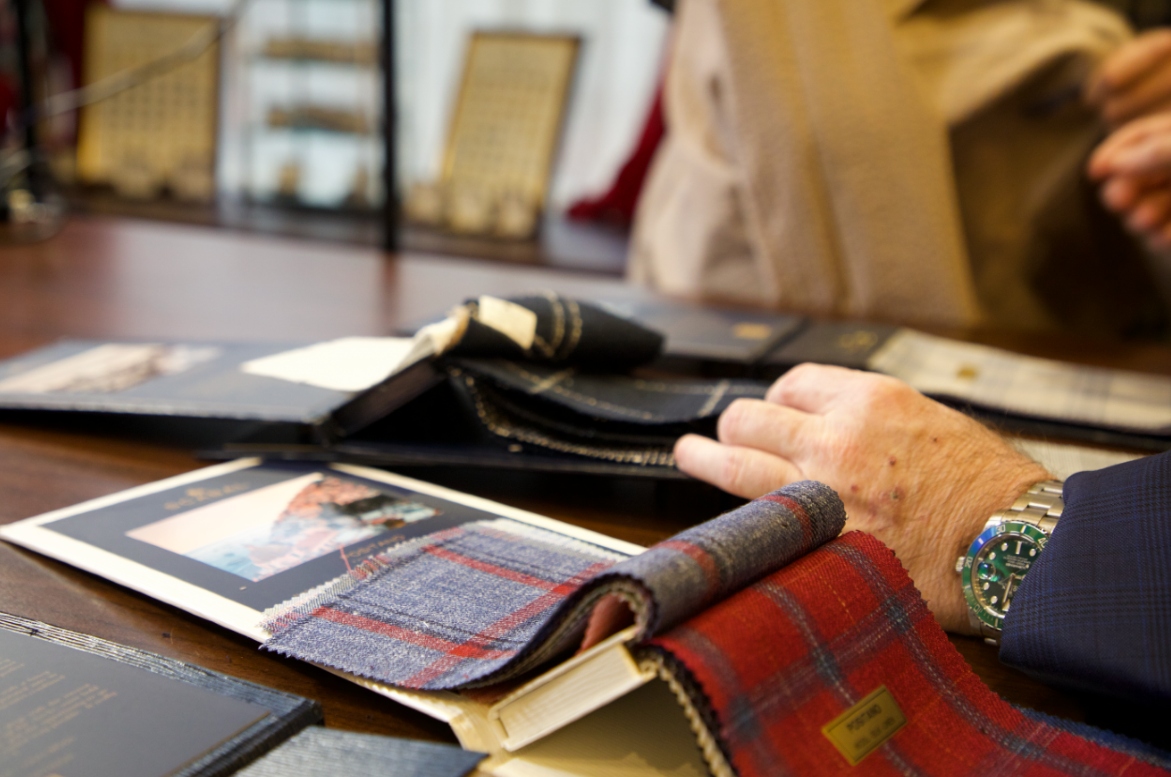
When commissioning a custom overcoat, ask to feel the fabric weights. The tactile difference often reveals more than specs ever could.
Styling: The Outer Expression of Personal Taste
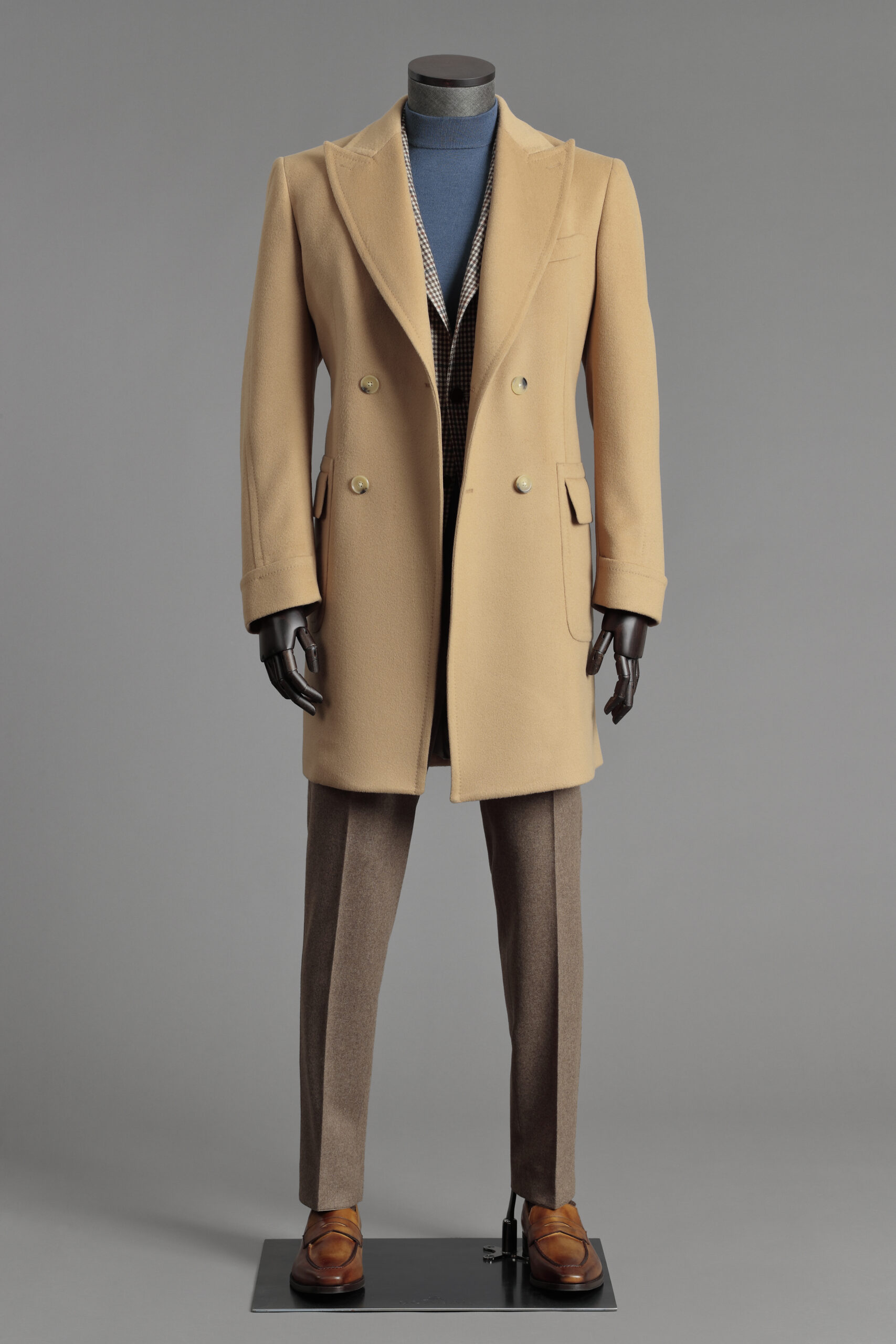
An overcoat is your wardrobe’s punctuation mark — the finishing statement that brings coherence to everything beneath it. It shouldn’t shout for attention, but it also shouldn’t disappear. The best coats harmonize with your existing wardrobe and lifestyle, offering versatility, polish, and ease in equal measure.
Color: Foundation First, Expression Second
Start with the classics — navy, charcoal, or camel. These foundational tones complement nearly every outfit, from tailored suits to denim and knitwear.
-
Navy projects refinement and professionalism; it’s ideal for businesswear and evening occasions.
-
Charcoal or mid-grey exudes understated authority and pairs beautifully with both warm and cool palettes.
-
Camel offers warmth and distinction, perfect for those who want a lighter, more relaxed sophistication.
Once you have your foundation coat, experiment with pattern and texture:
-
A herringbone adds subtle depth while remaining conservative.
-
A glen plaid or windowpane introduces quiet personality without crossing into flamboyance.
-
Textural fabrics like brushed wool, cashmere, or camel hair add visual interest — particularly in lighter hues.
Pro Tip: If your wardrobe leans toward navy and grey tailoring, a camel coat adds contrast. If you wear more earth tones, navy becomes your anchor.
Length & Proportion: The Architecture of Elegance
Length defines the tone of the coat. Traditionally, a full overcoat ends just below the knee — long enough to protect from the elements, short enough for ease of movement. But modern tailoring allows for flexibility depending on height, build, and intended use.
-
Longer coats (just below the knee to mid-calf) create a dramatic, elongated silhouette. They look especially sharp on taller men and those who want to emphasize formality.
-
Mid-thigh coats, such as topcoats or shorter Chesterfields, feel contemporary and versatile — excellent for city wear or travel.
-
Balance matters: If your trousers are slim and cropped, keep your coat more streamlined; if you favor fuller trousers or chunkier footwear, a longer, heavier coat keeps proportions in harmony.
Style Tip: When trying on an overcoat, look at how it moves. A great coat should sweep as you walk — a subtle, confident gesture that speaks to its fit and fabric quality.
Layering: Texture, Contrast, and Personality

An overcoat’s real magic is in how it interacts with what’s beneath it. Think of it as a frame for the rest of your look.
-
Formal Layering: A navy or charcoal Chesterfield over a suit creates continuity — refined, simple, and powerful.
-
Smart-Casual Layering: A camel polo coat over a turtleneck and denim bridges relaxed and elegant.
-
Casual Layering: A balmacaan or raglan-sleeve topcoat draped over a hoodie or heavy knit brings a touch of modern ease without losing polish.
Play with texture and contrast — flannel beneath wool, denim beneath cashmere, leather gloves against camel hair. These pairings add depth and interest, creating outfits that feel composed rather than assembled.
Pro Tip: Your overcoat doesn’t need to match your suit exactly. In fact, a slight contrast in tone or texture often looks more intentional and stylish.
Finishing Touches: The Small Things That Matter
Great style lives in the details — the things most men overlook but others notice instinctively.
-
Collar: Use it as both armor and accent. Pop it against the wind, or layer a scarf beneath to frame your face and add dimension.
-
Buttons & Fastening: Button the top two buttons when standing for a clean line; unbutton when seated to prevent stress on the fabric.
-
Accessories: Leather gloves, a well-tied scarf, and polished shoes complete the composition — never competing, only complementing.
Pro Tip: Treat your overcoat as part of your outfit, not an afterthought. The best-dressed men never remove style for the sake of warmth; they merge the two.
Conclusion
An overcoat is more than a shield against the cold — it’s the final expression of personal style. The right one frames your look, balances form with function, and reflects a deliberate approach to how you present yourself to the world. Every man has to face winter; not every man does it well.
When fabric, fit, and styling come together, an overcoat becomes more than outerwear — it becomes identity made tangible. It’s a handshake in motion, a quiet statement of composure that lasts long after you’ve stepped inside.
If you’re ready to explore what that means — to feel the difference between wearing an overcoat and owning one — schedule a consultation or visit our Philadelphia showroom. Let’s design the piece that will carry you through many winters, and countless first impressions, with confidence.