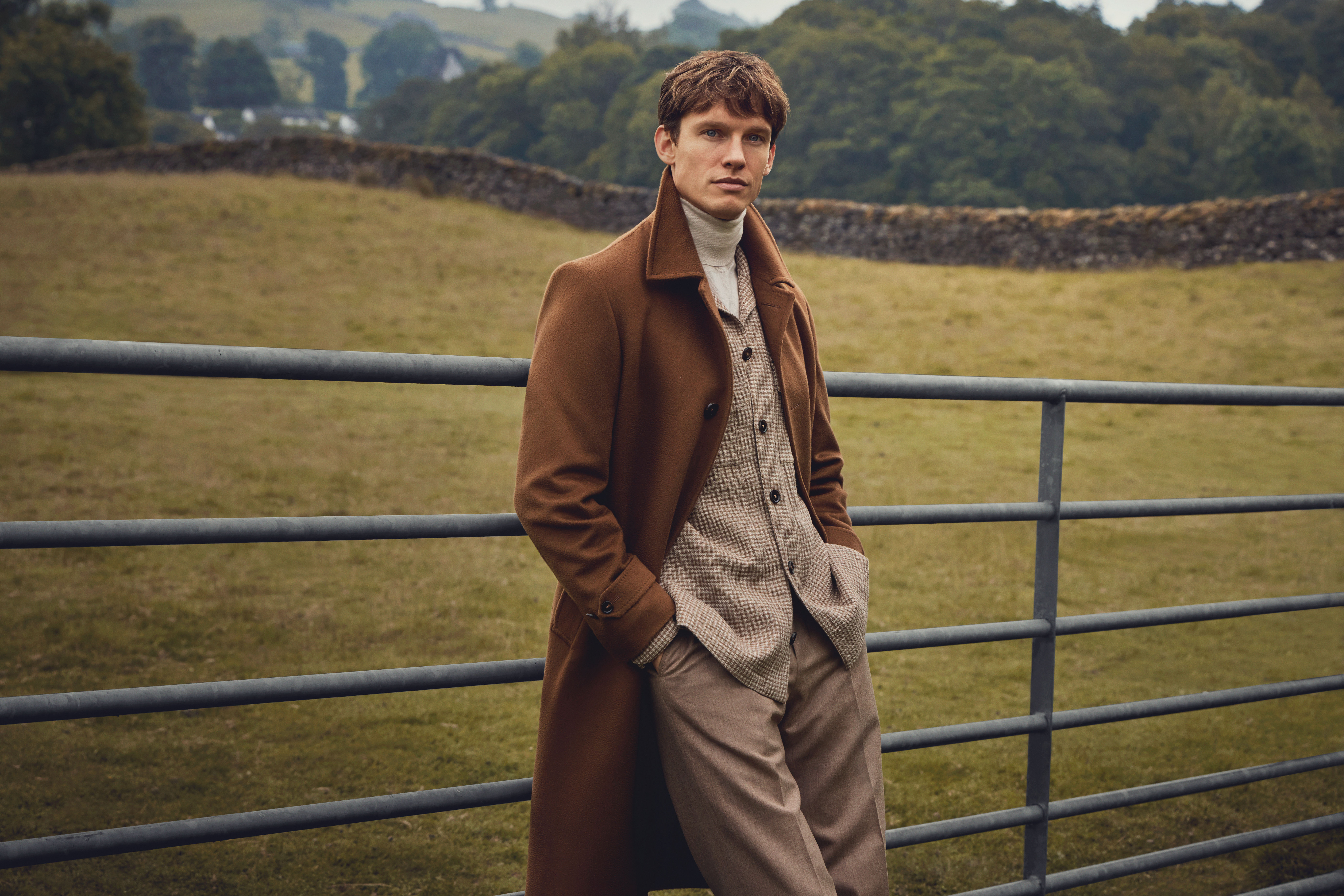
Scabal’s Autumn/Winter 2026 collection spans eight new fabric bunches: Freestyle, Tornado, Eton, Royal Gabardine, Golden Leaf, Mistral, Cascade, and Bliss. Four are built for business suiting, four for jackets and sport coats. The range runs from Super 120’s wool-cashmere gabardine woven at Scabal’s own English mill to pure worsted cashmere in a 2×2 twill.
Below is what each bunch is actually made of, what it does on the body, and how to pick between them.
What is Scabal's AW26 collection?
AW26 is Scabal’s Autumn/Winter 2026 fabric release: eight bunches covering suiting, jacketing, and the fine-wool-and-cashmere blends the house is known for. Scabal is a Brussels-based cloth merchant that weaves at its own mill in England, which is why several of these bunches carry English construction alongside Continental design.
If you have worked with us before, you already know Scabal as one of the mills we return to for clients who want a fabric with some presence to it. AW26 leans harder into texture and two-tone effects than the last few seasons did.
Which AW26 fabrics work best for business suits?

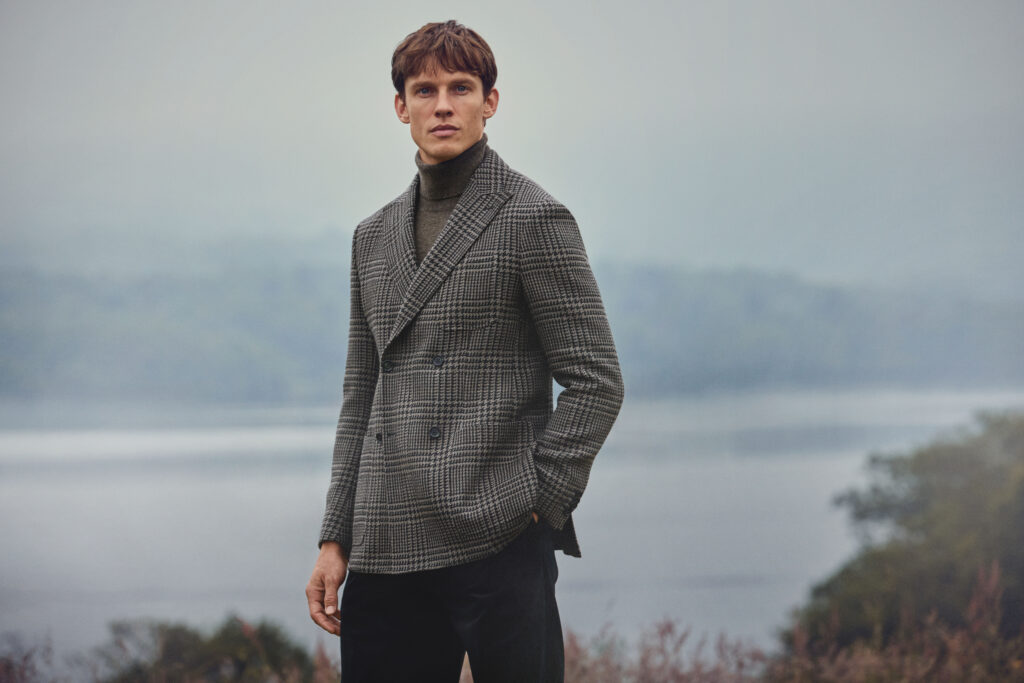
For suiting, the four to know are Eton, Tornado, Royal Gabardine, and Golden Leaf. Eton and Golden Leaf sit at the fine end. Tornado is the most durable. Royal Gabardine is the one to choose when you want a clean, compact cloth that still drapes.
Eton is built on the finest Super 130’s wool and runs birdseye, pinstripes, herringbones, decorative stripes, and twills woven with mouliné yarns. The mouliné construction is what gives it a distinctive two-tone finish: the cloth reads as a solid from across the room and reveals its structure up close. This is quiet sophistication in the literal sense. It is the right call for a first serious business suit.
Tornado is woven in England at Scabal’s own mill and has a noticeably robust hand feel. Expect checks, pinhead dots, jacquard-inspired motifs, herringbones, and a cavalry twill look. It is traditional English design pushed into modern business suiting, and it is the bunch we point to when a client wants a suit that will take five days a week of wear.
Royal Gabardine is a Super 120’s wool and cashmere blend, also woven in England, in a true gabardine construction. Three of its articles carry striking changeant effects, where the warp and weft are different colors and the cloth shifts tone as you move. There is also a denim-inspired blue. Gabardine is compact yet light, which is an unusual combination and the reason it hangs so well.
Golden Leaf is the top of the AW26 suiting range: Super 160’s wool and cashmere in shadow stripes, herringbones, and a pic-and-pic graphic check. It has a natural luminescence and a soft body. Understated neutrals throughout. This is a boardroom cloth, not a commuting cloth.
Which AW26 fabrics work best for sport coats?
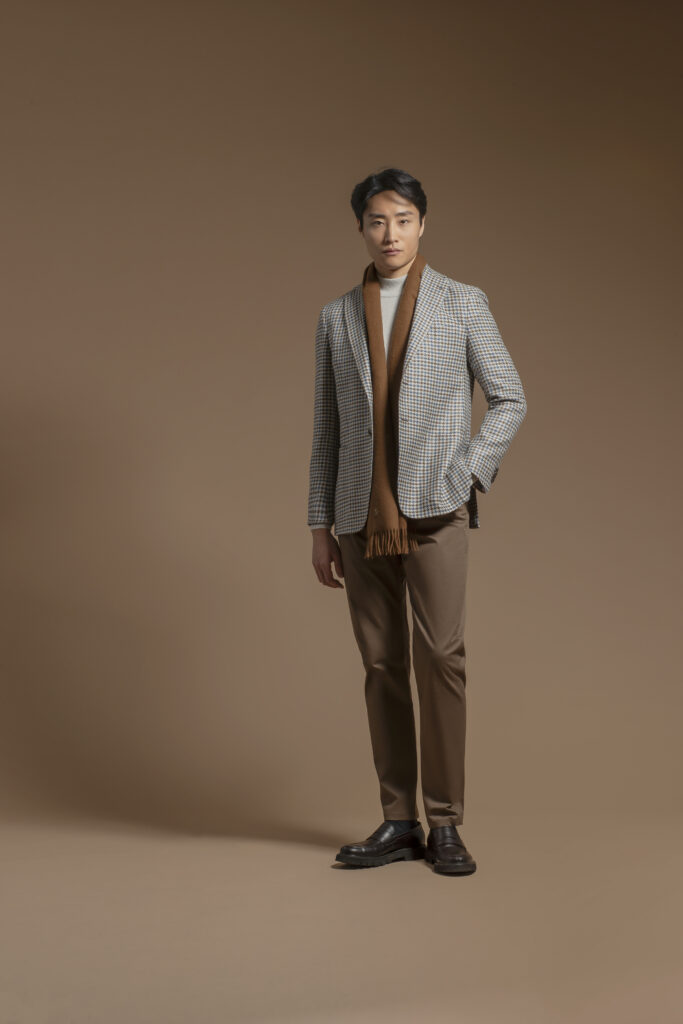
Mistral, Cascade, Bliss, and parts of Freestyle carry the jacketing. Mistral is the broad luxury jacket collection, Cascade is the structured check capsule, and Bliss is the cashmere play.
Mistral is Scabal’s luxury jacket collection for the season, with refined and varied textures across a range of weights. The palette runs beige, brown, and blue with touches of red. The emphasis is on elevated comfort, which in practice means a jacket you reach for on a Saturday as readily as a Tuesday.
Cascade is a capsule of 20 articles in Super 130’s wool at 240gm, all check designs, with a smooth clear-cut finish. The 240gm weight is the detail worth noting: substantial enough to hold a shape through a Philadelphia winter, light enough that you are not fighting it indoors. Colors run blue, burgundy, mauve, and brown.
Bliss is pure worsted cashmere, offered as plains alongside seven distinctive fancy patterns in a 2×2 twill, plus textured constructions using mouliné cashmere yarns. Worsted cashmere is the important phrase here. Worsting the yarn before weaving gives cashmere a cleaner, more resilient surface than the fuzzy woolens most people picture, so it tailors properly instead of going shapeless.
Freestyle rounds it out with 20 fabrics for refined contemporary suiting, from sleek designs through subtly patterned checks, in beige, grey, blues, and browns.
What do Super 130's and Super 160's actually mean?
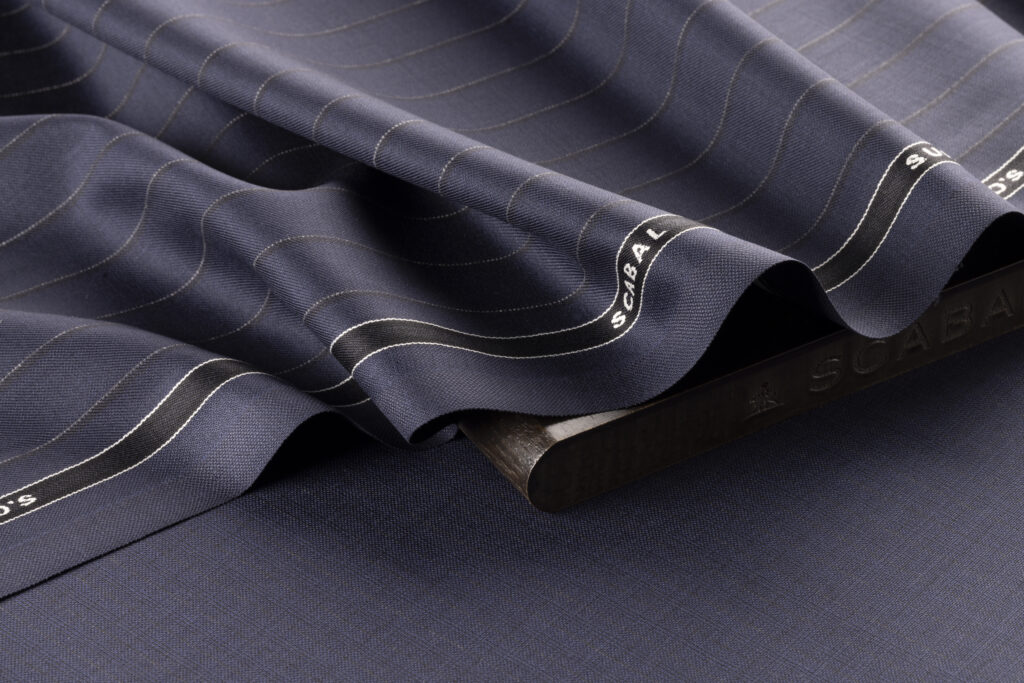
The Super number describes the fineness of the wool fiber, not the quality of the finished cloth. A higher number means a finer, softer fiber and a more luminous drape. It also means a more delicate cloth that resists creasing less well and wears out faster under hard use.
Super 160’s is not simply better than Super 130’s. It is different. A Super 160’s wool-cashmere like Golden Leaf is spectacular for a suit worn to close a deal and hung up carefully afterward. A Super 130’s like Eton or Tornado’s English construction will survive a garment bag, a train, and a full week. Match the number to the life the garment will have.
Related reading: What Determines A Luxury Fiber
How heavy should a fall suit fabric be?
Cascade’s 240gm is a useful anchor. Fabrics around 230 to 260 grams behave as true three-season cloths in the Mid-Atlantic. Below roughly 220gm you are in warm-weather territory. Above 300gm you are into genuine winter cloth that will be uncomfortable in a heated office.
Most of our Philadelphia clients are best served by building the core wardrobe in the 240 to 280 range and reserving heavier weights for overcoats and a single winter jacket.
Related reading: A Brief Guide To Cloth Weights and Tips On Choosing Cloth
How to choose between them

Ask three questions in order.
- What is this garment for? Suit or jacket. That immediately halves the list.
- How often will it be worn? Heavy rotation points to Tornado, Eton, or Cascade. Occasional and high-stakes points to Golden Leaf, Royal Gabardine, or Bliss.
- What is already in the closet? If you own three solid navy suits, the answer this season is a Cascade check or a Mistral texture, not another solid.
Fabric photographs badly. A changeant gabardine or a mouliné twill looks flat on a screen and comes alive under showroom light against your own skin tone. That gap is the entire reason we ask clients to see cloth in person.
Frequently asked questions
When does the Scabal AW26 collection become available to order? AW26 bunches are in our Philadelphia showroom now. Lead times for a custom suit typically run several weeks from measurement to first fitting, so ordering early in the season means wearing the garment during the season it was designed for.
Is Scabal woven in England or Belgium? Scabal is headquartered in Brussels and weaves at its own mill in England. Several AW26 bunches, including Tornado and Royal Gabardine, are specifically noted as woven at the Scabal mill in England.
What is the difference between worsted cashmere and regular cashmere? Worsted cashmere uses combed, aligned fibers spun into a smooth yarn, producing a cleaner surface that holds tailored shape. Woolen-spun cashmere is loftier and softer to the touch but less structured. Bliss is worsted, which is why it works as jacketing rather than as a sweater.
What is a changeant effect? Changeant is a weave where the warp and weft threads are different colors, so the cloth shifts tone depending on the angle of light. Three Royal Gabardine articles in AW26 use it.
See the AW26 collection in Philadelphia
The full Scabal AW26 range is available at our Rittenhouse Square showroom, and we feature it at our Fall Wardrobe Event alongside our other mill partners.
If you are considering a fall commission, the most useful first step is a short conversation about what you actually need. Book a 15-minute intro call and we will tell you honestly whether a Golden Leaf suit or a Cascade jacket makes more sense for your wardrobe.
More on building a fall wardrobe: When Is the Best Time to Order an Overcoat? | Custom Suit Consultation in Philadelphia: What to Expect
Source: Fabric specifications from Scabal’s official AW26 fabrics page.